WHY WE CHANT
A Whisper Over the Steam
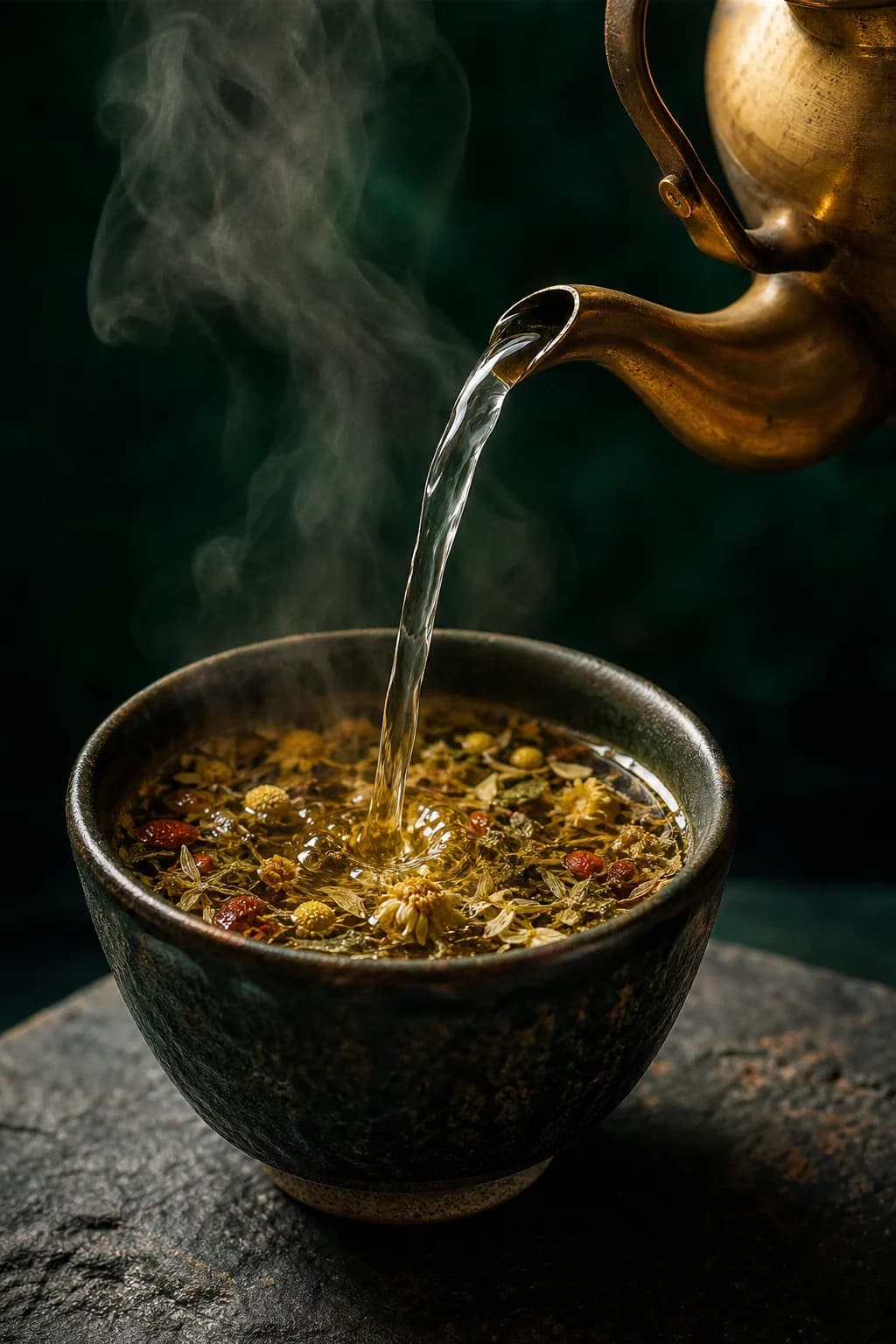
Every Dhā-rī-nī tin carries a sealed mantra. Hold the warm cup in both hands, whisper it over the steam while the tea rests for two to three minutes, then sip in silence. Some of you have asked a fair question: why? This page is our honest answer.
THE ANCIENT ROOTS
Older Than Any Laboratory
Speaking over what we eat and drink is not our invention. It is one of India's oldest habits, carried through kitchens, temples and grandmothers for thousands of years.
- I
SANKALPA
The power of intention
In the Vedic tradition, every meaningful act begins with a sankalpa: a clear, quiet resolve held in the heart. It is not a wish sent outward. It is a direction given to your own mind before you begin.
- II
NĀDA
The world as sound
The seers taught nāda brahman, that the universe is woven from vibration. A mantra is sound shaped with care: a few syllables, repeated slowly, until the breath, the voice and the attention move as one.
- III
ANNA
Food as something sacred
The Taittirīya Upaniṣad says annam brahma: food is the divine. That is why Indian families have long blessed a meal before eating it. The cup in your hands deserves the same respect.
“Brahmārpaṇaṁ brahma haviḥ…”
The offering is the divine, and so is what is offered. Many families still say this verse from the Bhagavad Gītā (4.24) before every meal.
BEYOND WHAT INSTRUMENTS CAN MEASURE
Two Ways of Knowing
Modern science studies the world from the outside. It is superb at measuring the body: heart rate, breath, blood, sleep. But consciousness, intention and the felt sense of being present are harder to capture. Every instrument has its limits.
The Vedic seers studied the same questions from the inside, through practice, stillness and careful observation of their own minds. The Kena Upaniṣad describes it as that which the mind cannot think, but by which the mind thinks.
We do not see these two ways of knowing as rivals. Each sees something the other cannot. The mantra belongs to the inner way, and the best test of it is your own experience.
WHAT SCIENCE CAN SEE
Where the Outer Way Agrees
Science cannot measure intention itself, but it has looked closely at what happens around it.
Chanting slows the breath
A 2001 study in the British Medical Journal found that reciting a mantra slowed breathing to about six breaths a minute, a rhythm associated with a calmer body.
Small rituals settle the mind
Researchers at Harvard found that performing a simple ritual before a stressful task lowered anxiety, and that a short ritual before eating made people enjoy their food more.
Expectation shapes experience
The placebo effect is one of the best-documented findings in medicine. What we expect and where we place our attention measurably changes how we feel.
STORIES THAT INSPIRED MANY
Water, Rice and Words
THE WATER CRYSTALS
In the 1990s, the Japanese author Dr. Masaru Emoto photographed frozen water crystals after exposing the water to words, music and prayer. He reported that kind words produced beautiful, symmetrical crystals, and harsh words produced broken ones. His images moved millions of people around the world.
THE RICE EXPERIMENT
Inspired by his work, people began a simple test at home: cooked rice in two jars, one spoken to with love and gratitude, the other with scolding. Many report that the scolded rice spoiled first, while the appreciated rice stayed fresher for longer.
In honesty: mainstream science has not accepted these findings, and people who repeat the rice experiment get mixed results. We share them not as proof, but as stories that echo what our traditions have always taught: that the way we speak to things matters. If you are curious, try the rice experiment yourself and see what you notice.
You Don't Have to Believe
Simply pause. Breathe. Set your intention. Let two to three minutes of steam become the quietest part of your day, and notice how you feel.
The mantra is a practice of calm and intention. It is not a treatment and does not change what the herbs do. Our teas support your wellbeing; they do not replace advice from your doctor.